The case for the swarm
Why a swarm beats static routes
A static route is a plan. A swarm is a response. Here's the difference where it counts.
A storm, two ways
Where a plan breaks, the swarm bends
Four moments every fleet knows, from the first flake to the plow ridge at 3 a.m. Here's how each plays out on a hand-built route — and inside the swarm.
Getting started
Legacy static routes
Hand-build every route, property by property, with endless clicking — before the storm even starts
Snowmass swarm
Drop your properties on a map once; the fleet assigns itself from the first flake
A driver doesn't show
Legacy static routes
Their whole route is late; the dispatcher re-carves it by hand over the radio
Snowmass swarm
Their properties flow to the rest of the swarm automatically — no one re-plans
A machine breaks down
Legacy static routes
Downstream stops stall until someone manually re-routes them
Snowmass swarm
Its work is released and re-claimed within minutes, automatically
A plow re-buries an entrance
Legacy static routes
A static list can't even express it; the property is quietly missed
Snowmass swarm
The operator flags it and the swarm sends someone back after a cooldown
See it for yourself
Prove it before the storm. Watch it during.
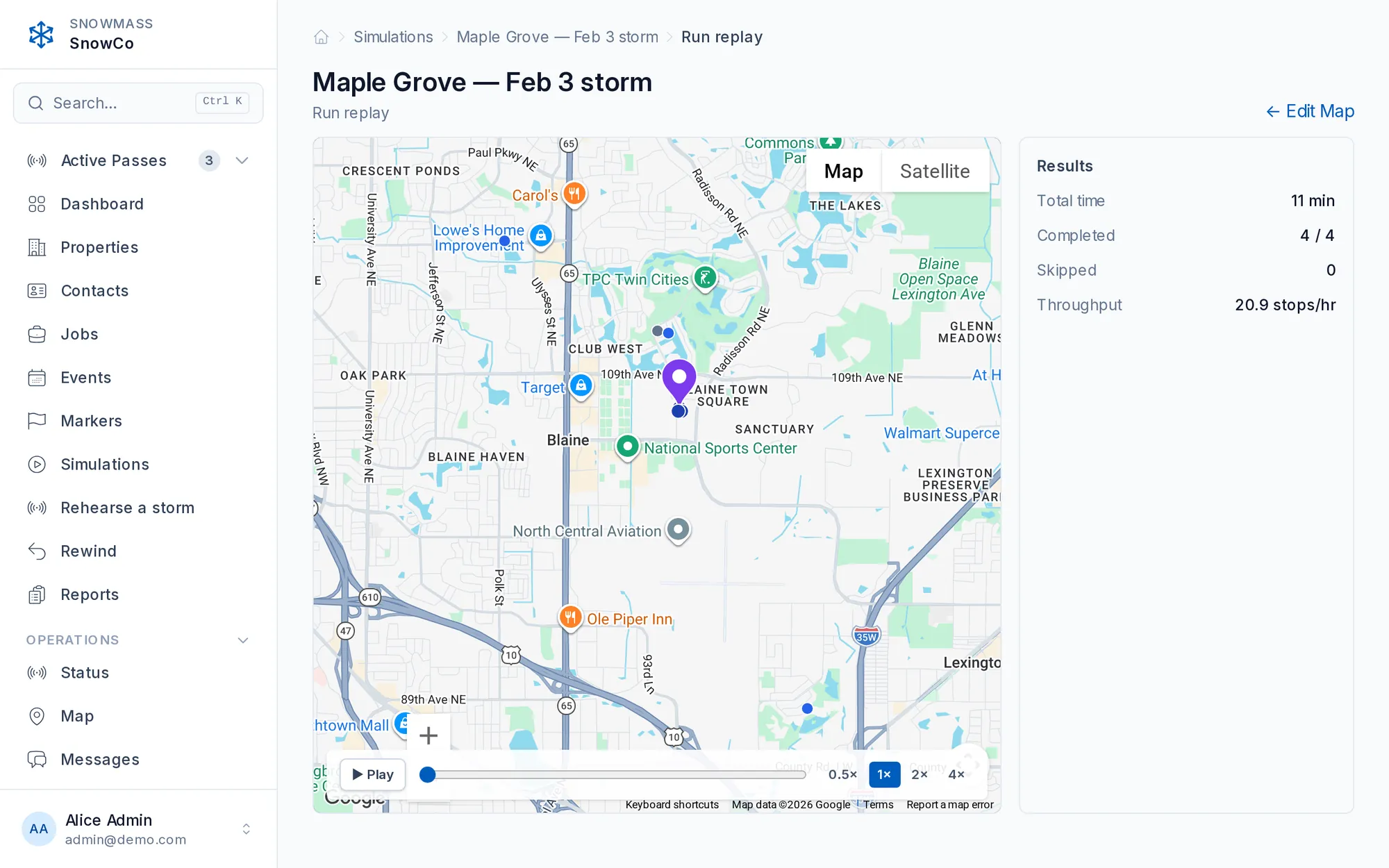
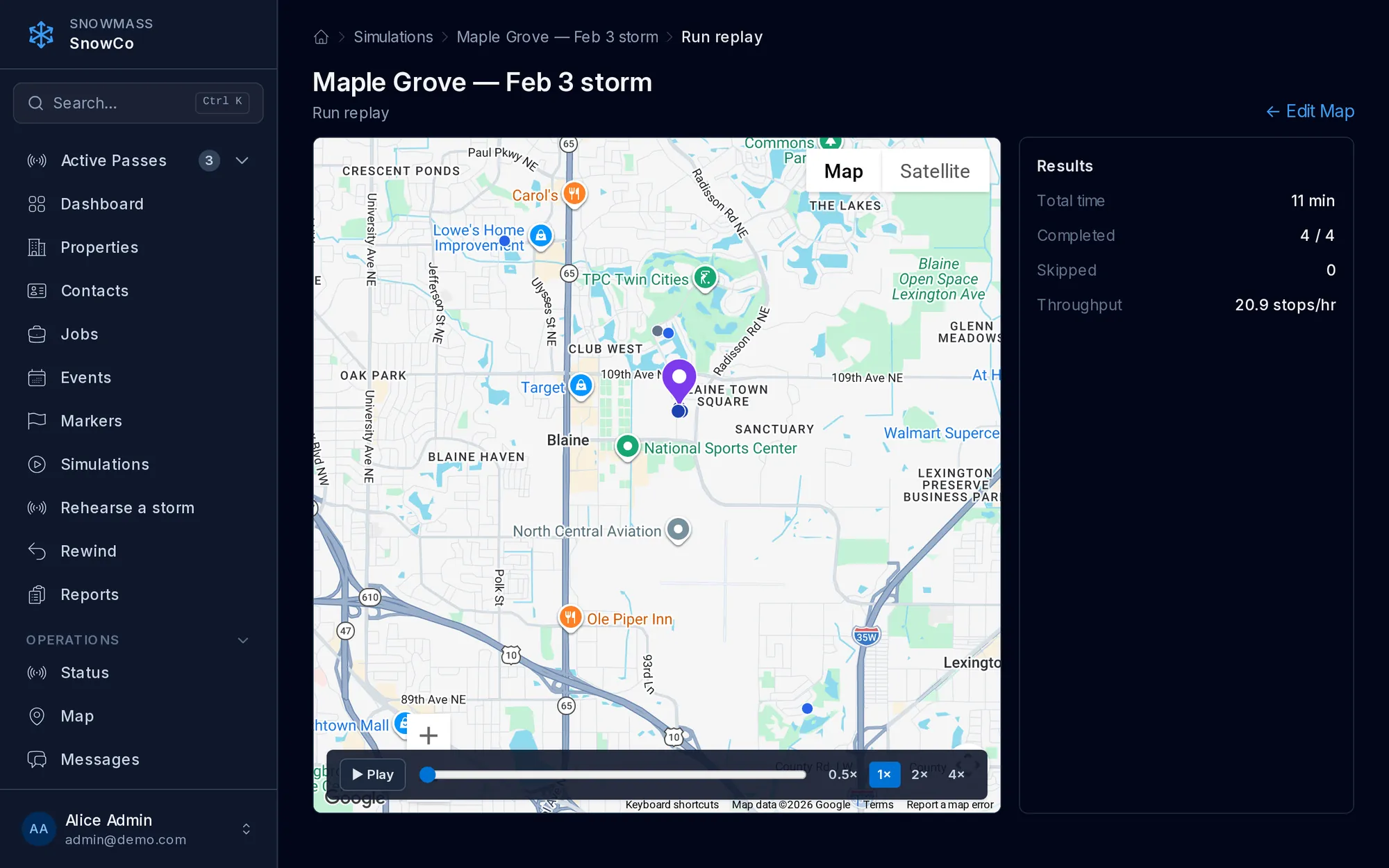
Run the storm before it snows
Buying another tractor is a five-figure decision usually made on a hunch. Build a storm on your real book, set the fleet you're thinking about, and watch it play out — then add the machine and watch it again. You see what an extra vehicle actually buys you in finish time before you spend anything.
Watch the fleet move, live
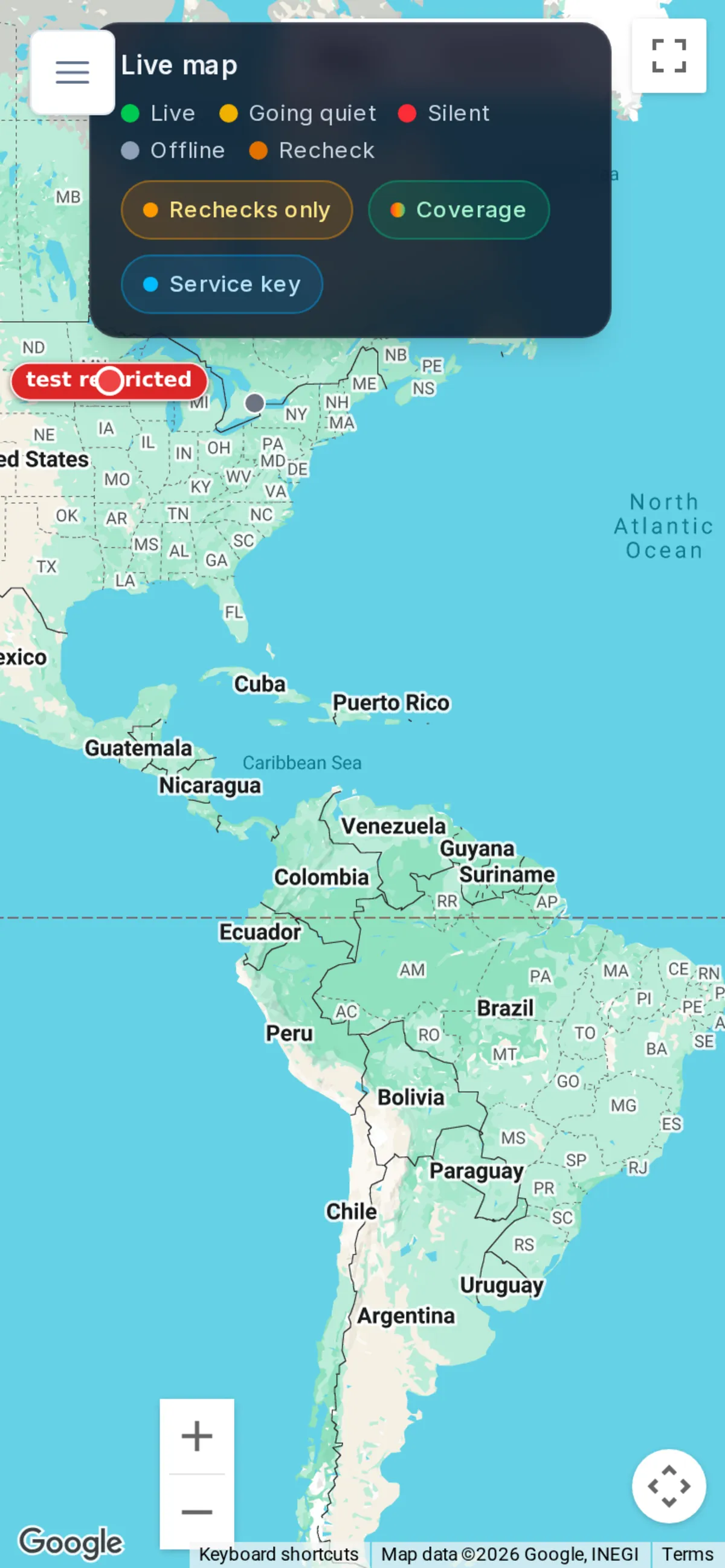
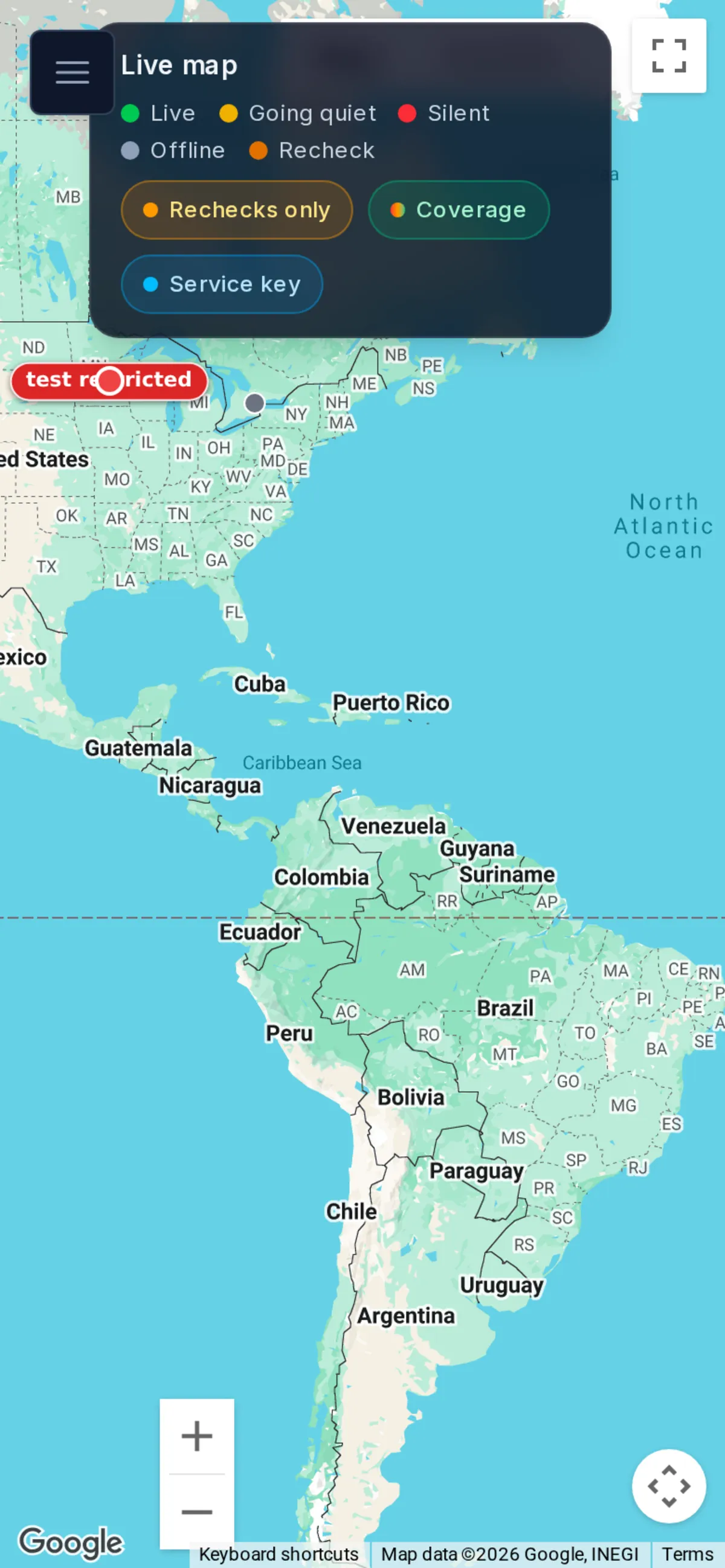
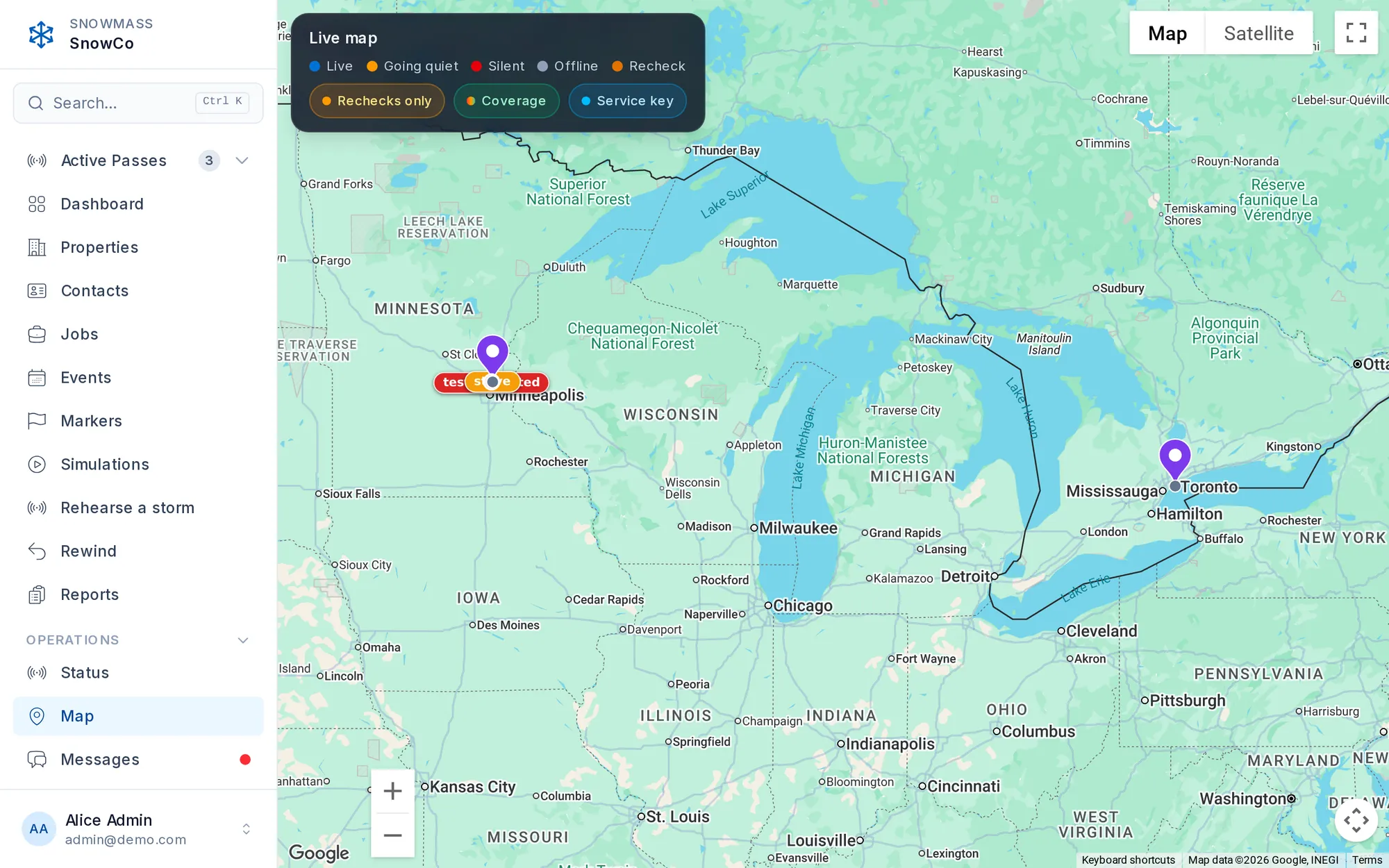
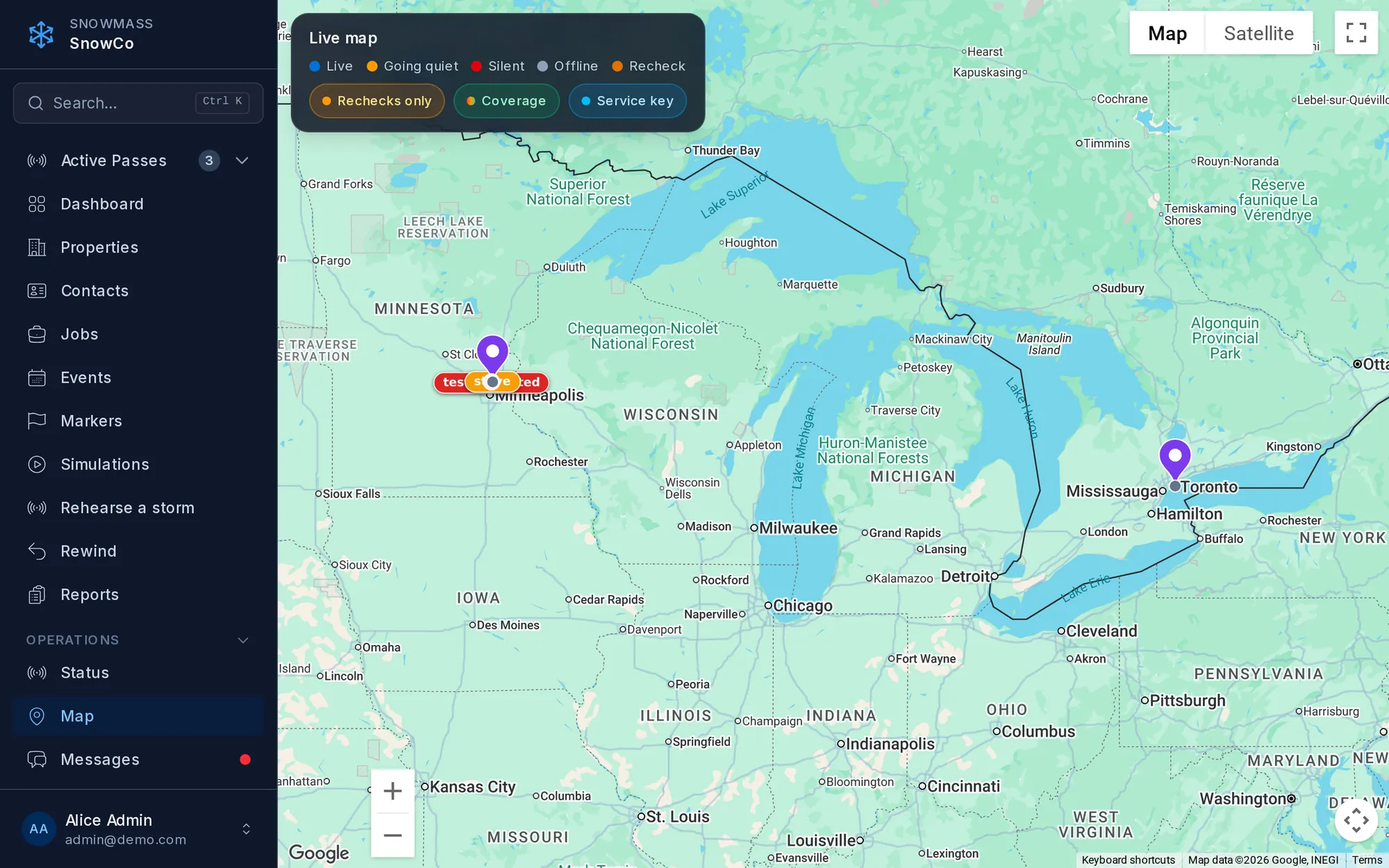
Every vehicle and every property on one map, updating as your operators work. When a tractor stalls or a street is taking twice as long as it should, you see it the moment it happens rather than in the morning debrief.
Where it compounds
The denser your book, the bigger the gain
It pays off most where the work is packed tight. A few seconds saved per stop compounds across hundreds of stops in a night — and the denser your book, the wider that gap opens.
Ready before the next storm
Run a simulation scaled to your fleet, or talk to the team about the season.