Winter operations, re-thought
Your fleet stops following a route. It starts running as a swarm.
When a driver doesn't show or a machine goes down, the plan is already wrong. Snowmass has no routes to break — your fleet re-assigns itself, all storm long.
Personalized to your fleet. No account required.
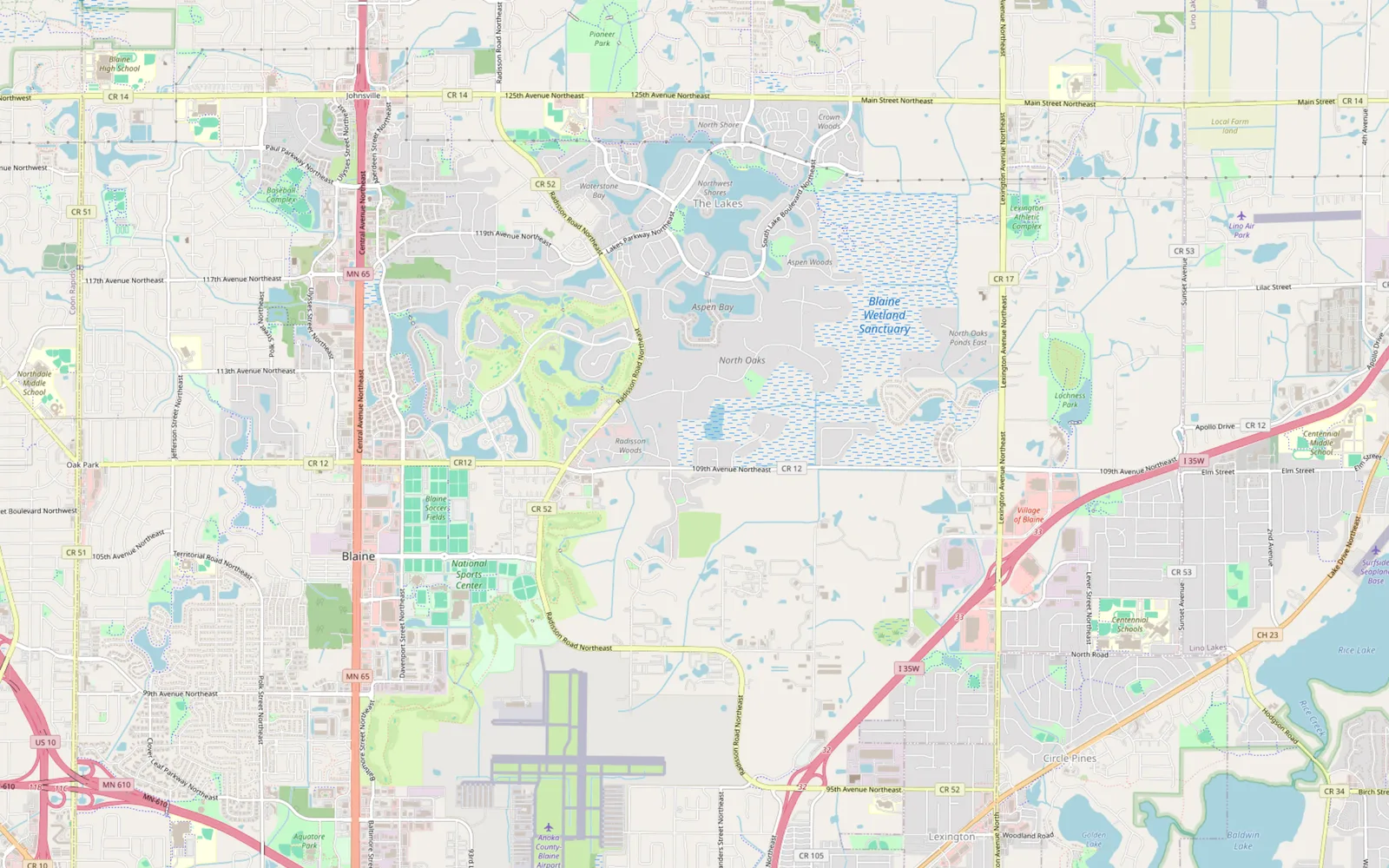
Built for dense residential routes — driveways, condo associations, and townhome complexes.
The problem
Static routes break the moment the storm changes
You hand-build every route, then one sick driver or one breakdown makes every stop after it late — and the dispatcher is back on the radio re-carving routes.
Why crews switch
Three things a swarm does that a route can't
It absorbs the emergencies
A no-show, a breakdown, a dropped signal — that machine's properties flow back to the fleet within minutes.
Add work on the fly — no re-routing
Win a property mid-season or pile on extra stops, and the swarm just absorbs them. There's no route to redraw.
Communication before, during, and after
Line up your crew before the first flake, keep customers posted during, and hand them a clean record after.
Inside the product
The storm, on one screen
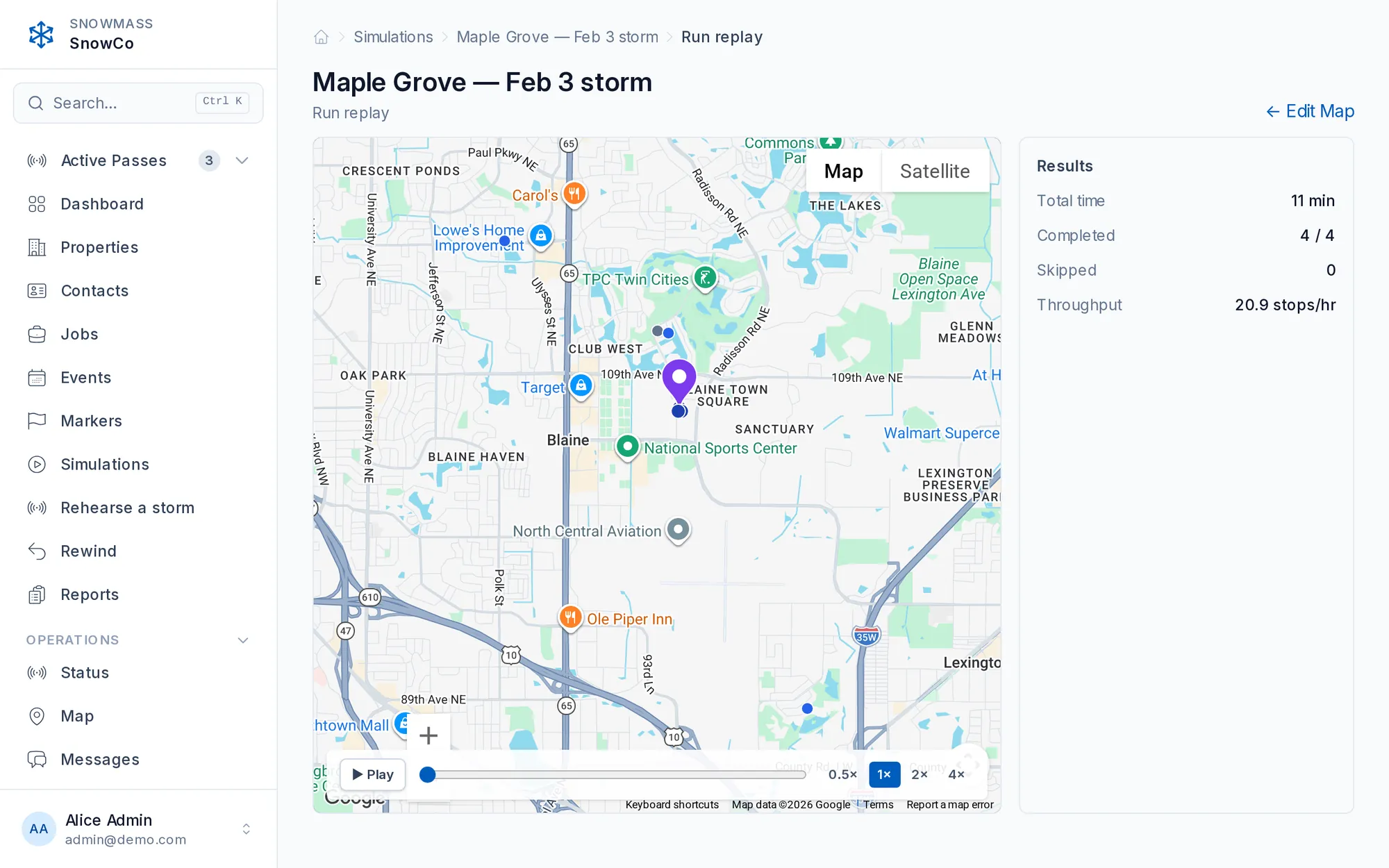
Real screens from a live fleet — the map your dispatcher watches and the record your customers ask for.
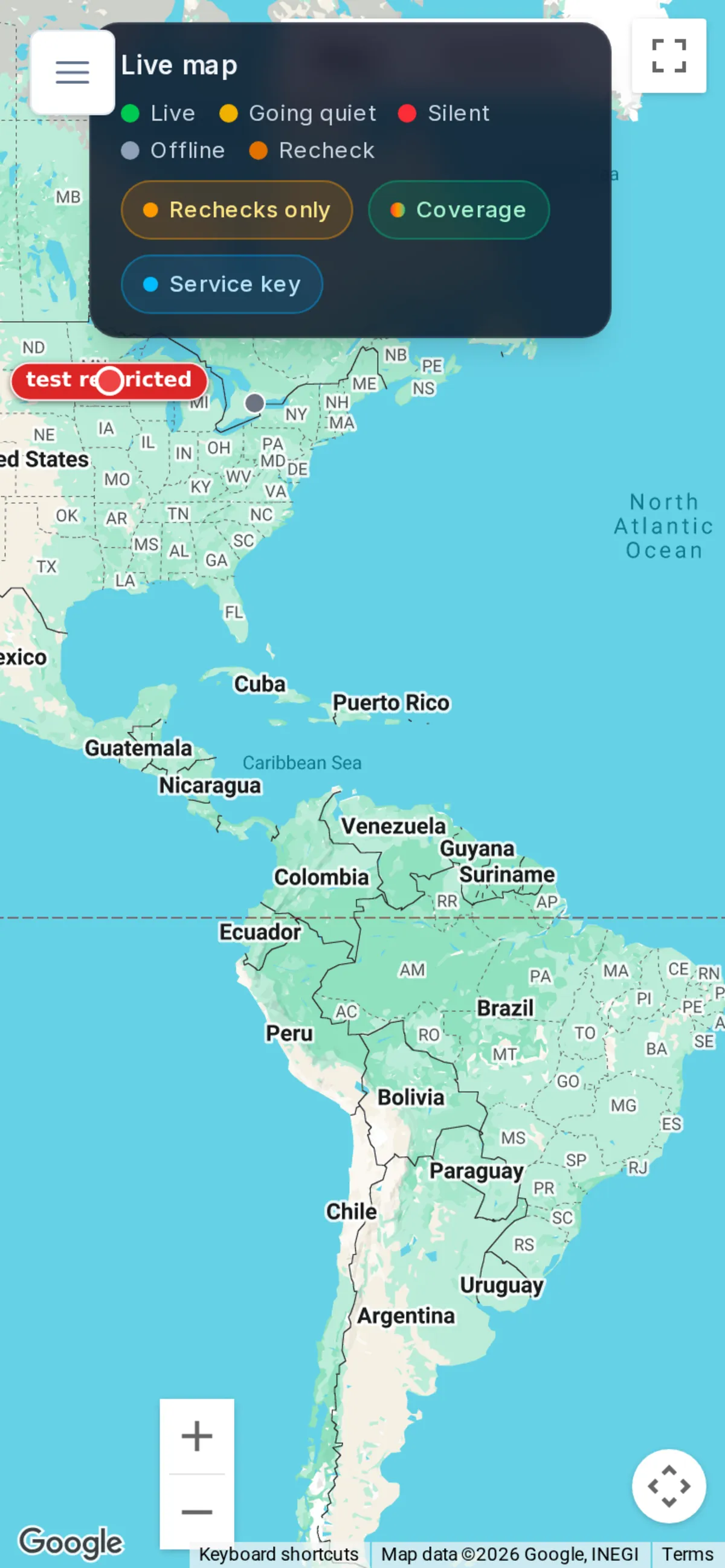
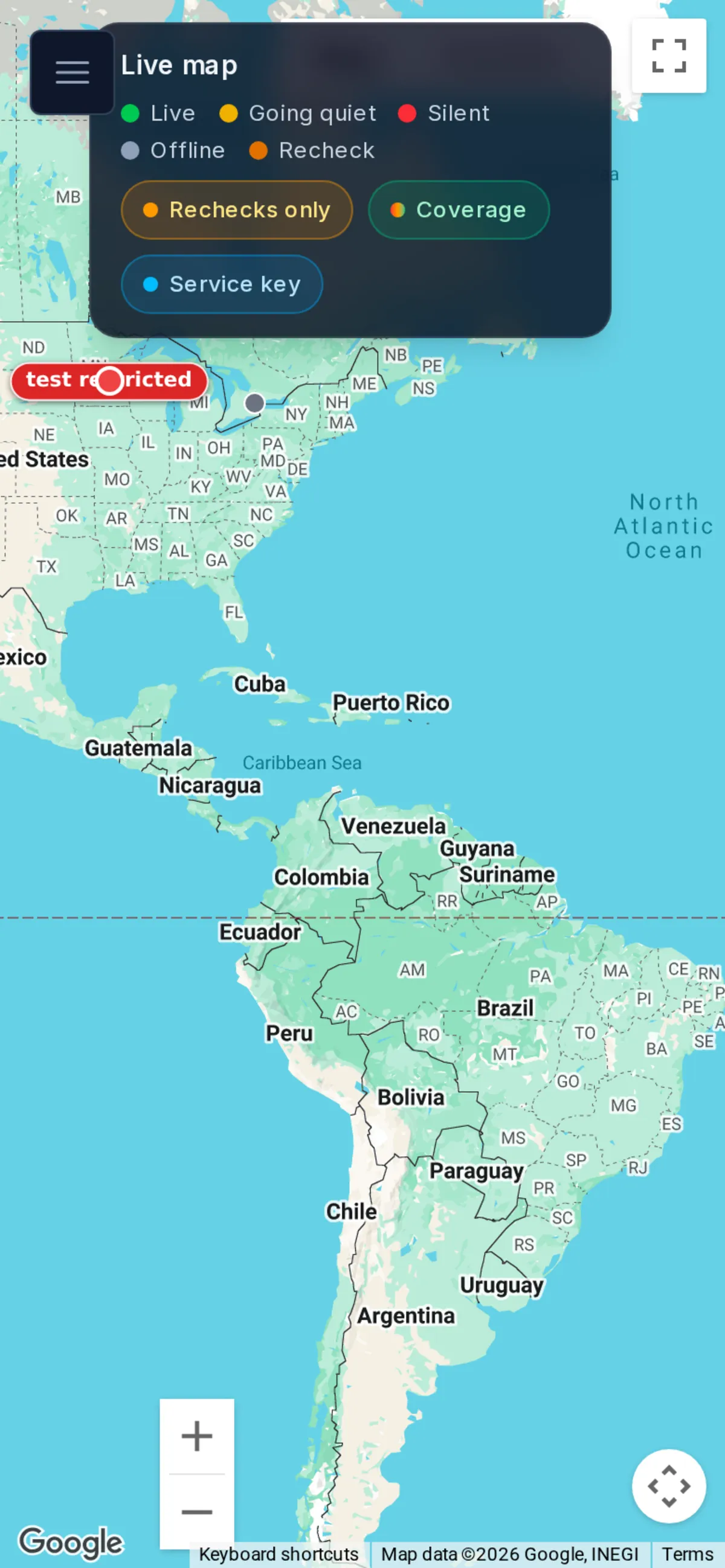
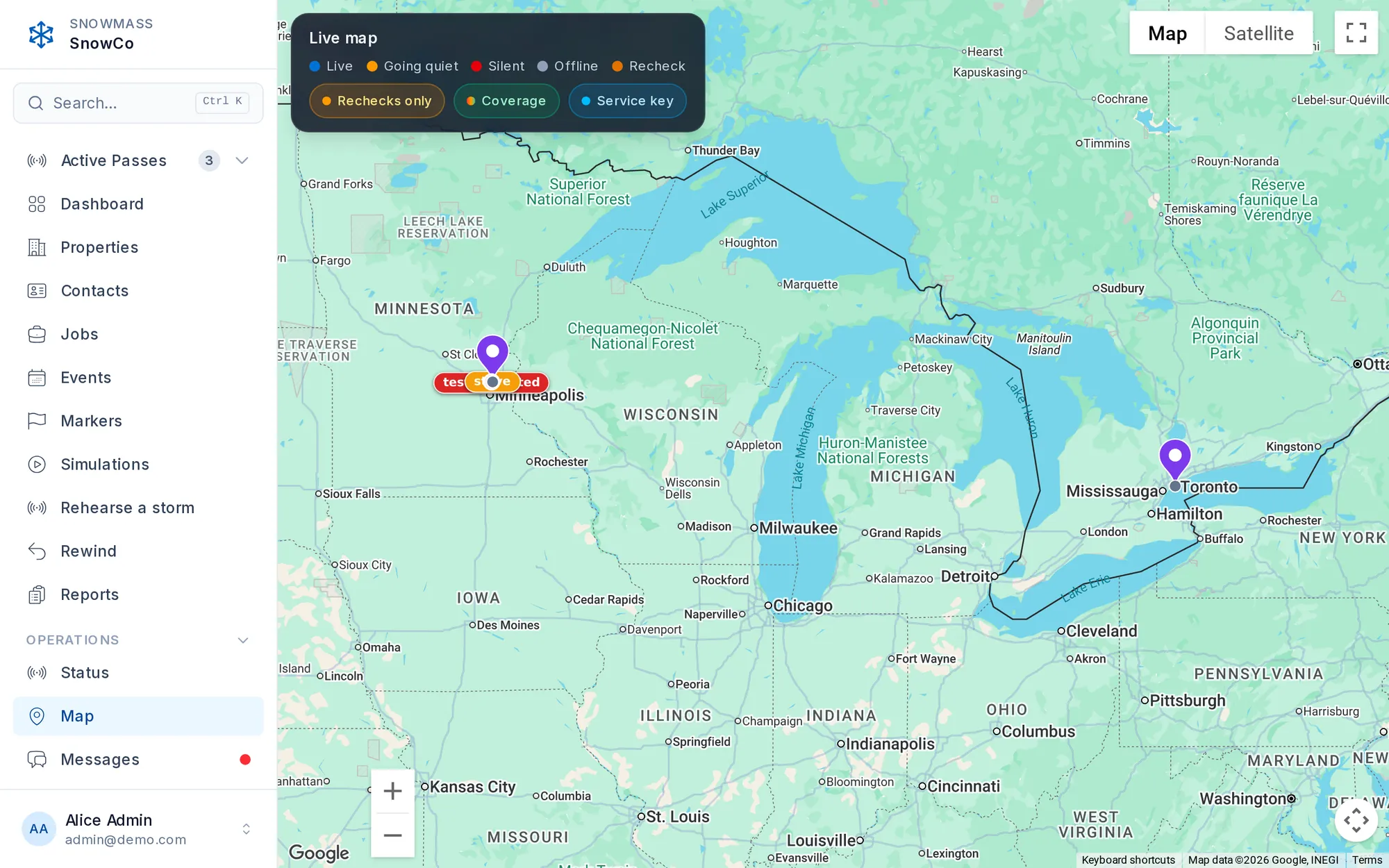
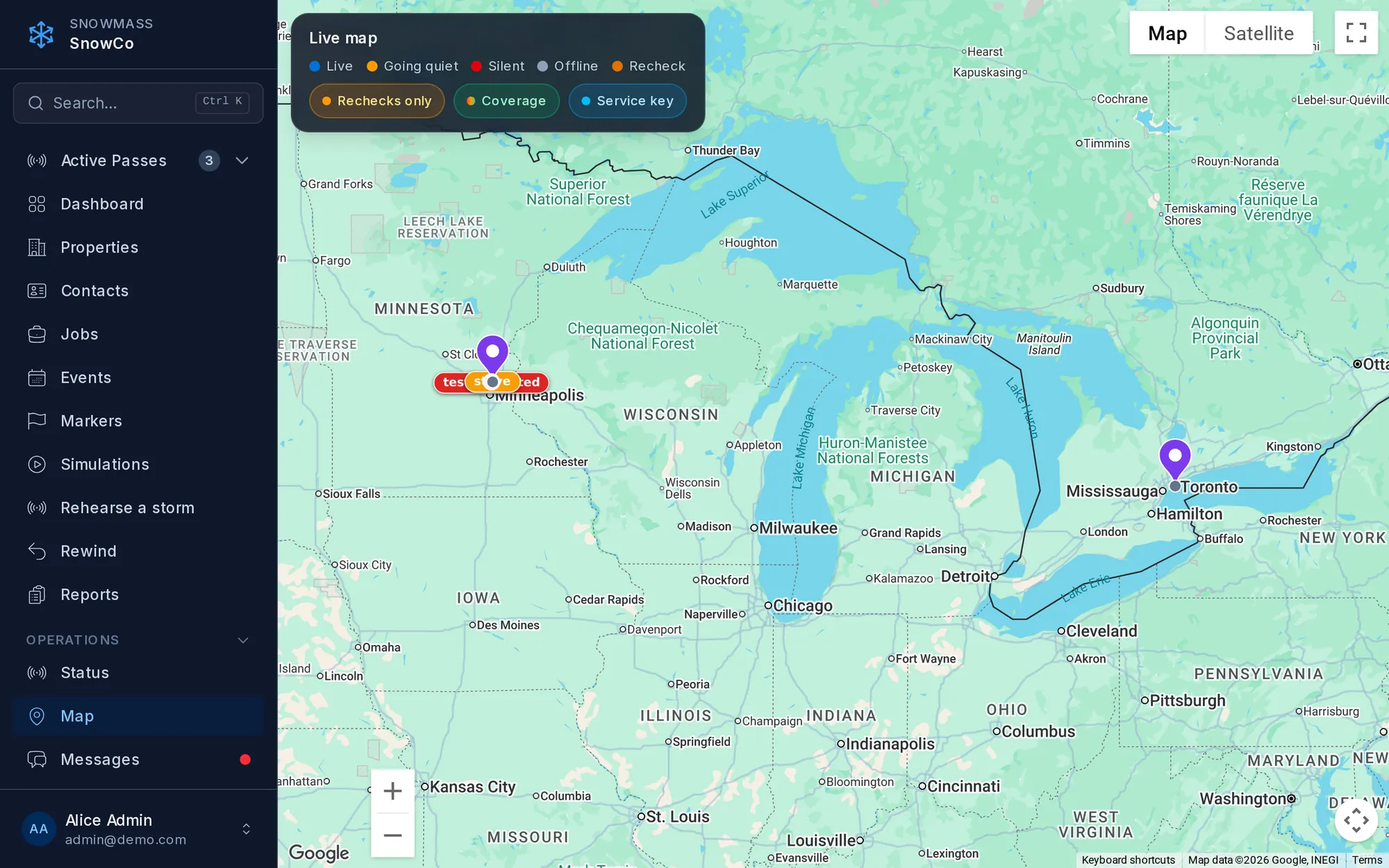
Live map
Watch the whole fleet move
Every machine, every property, every status on one map. When one stalls, you see it as it happens.
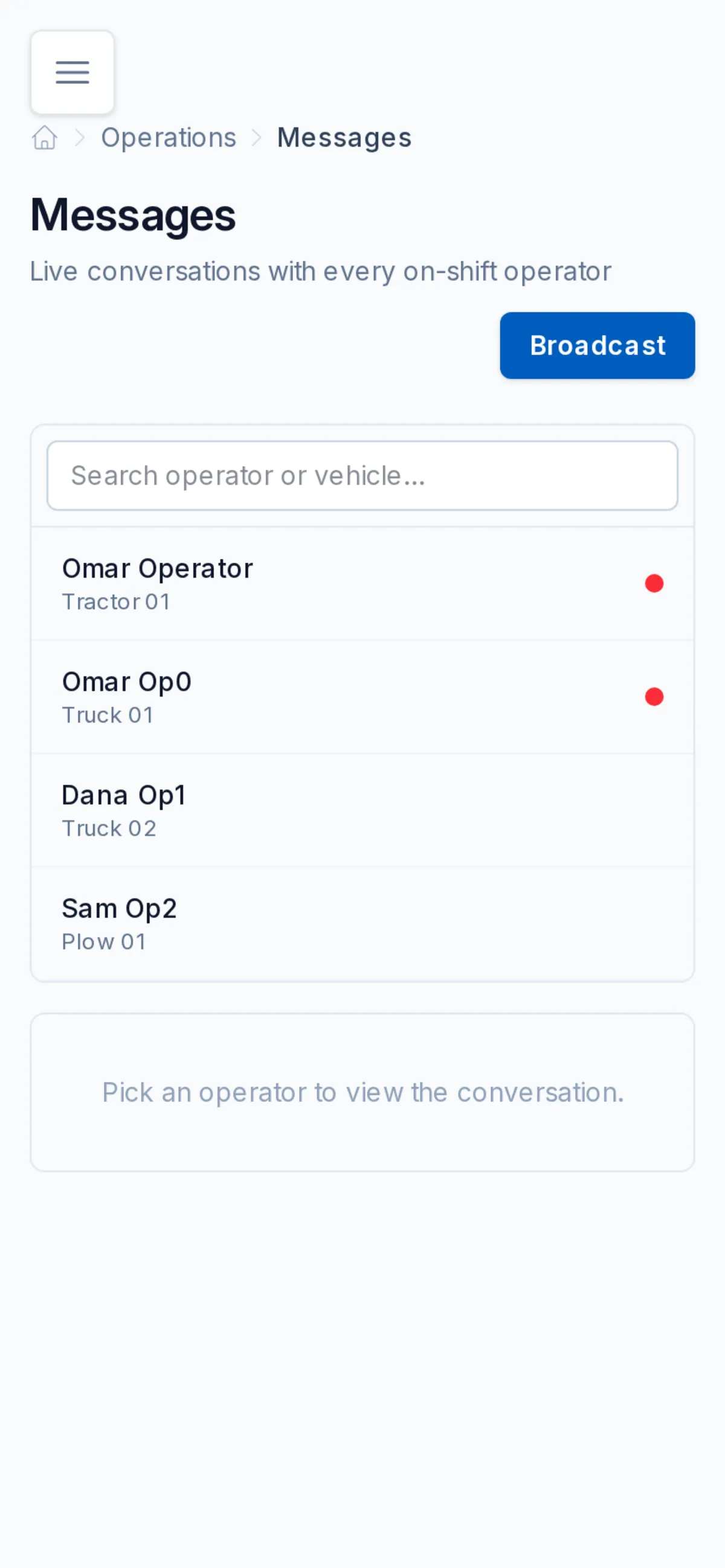
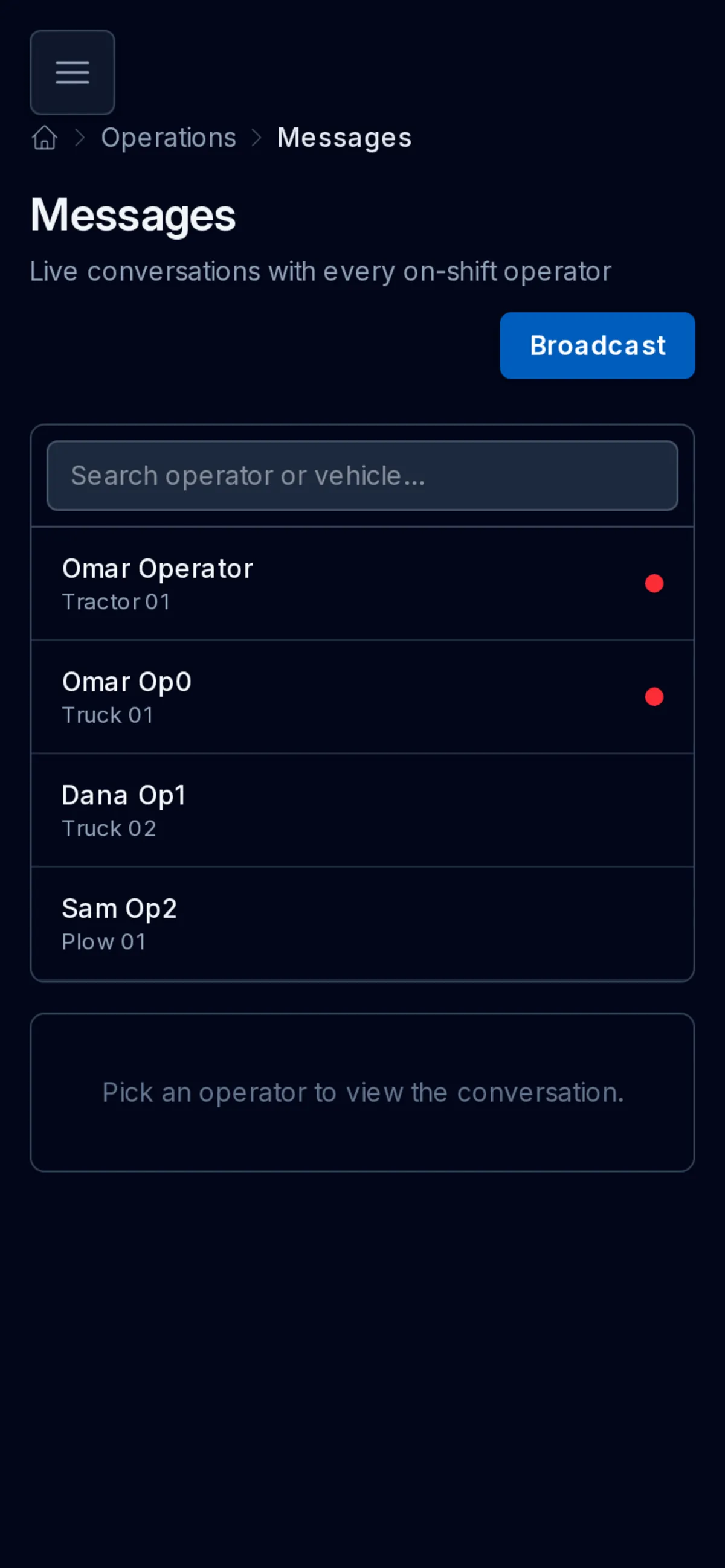
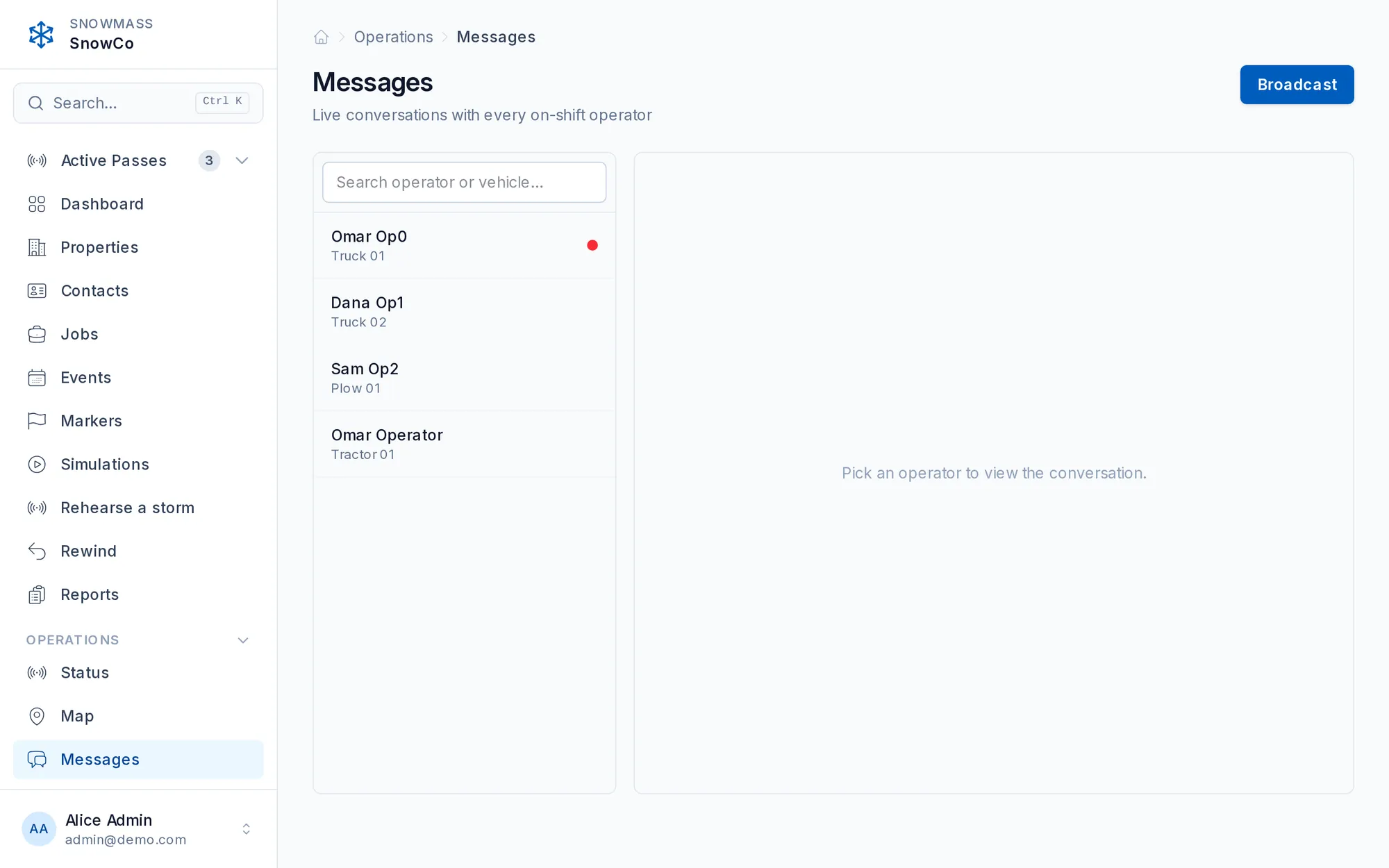
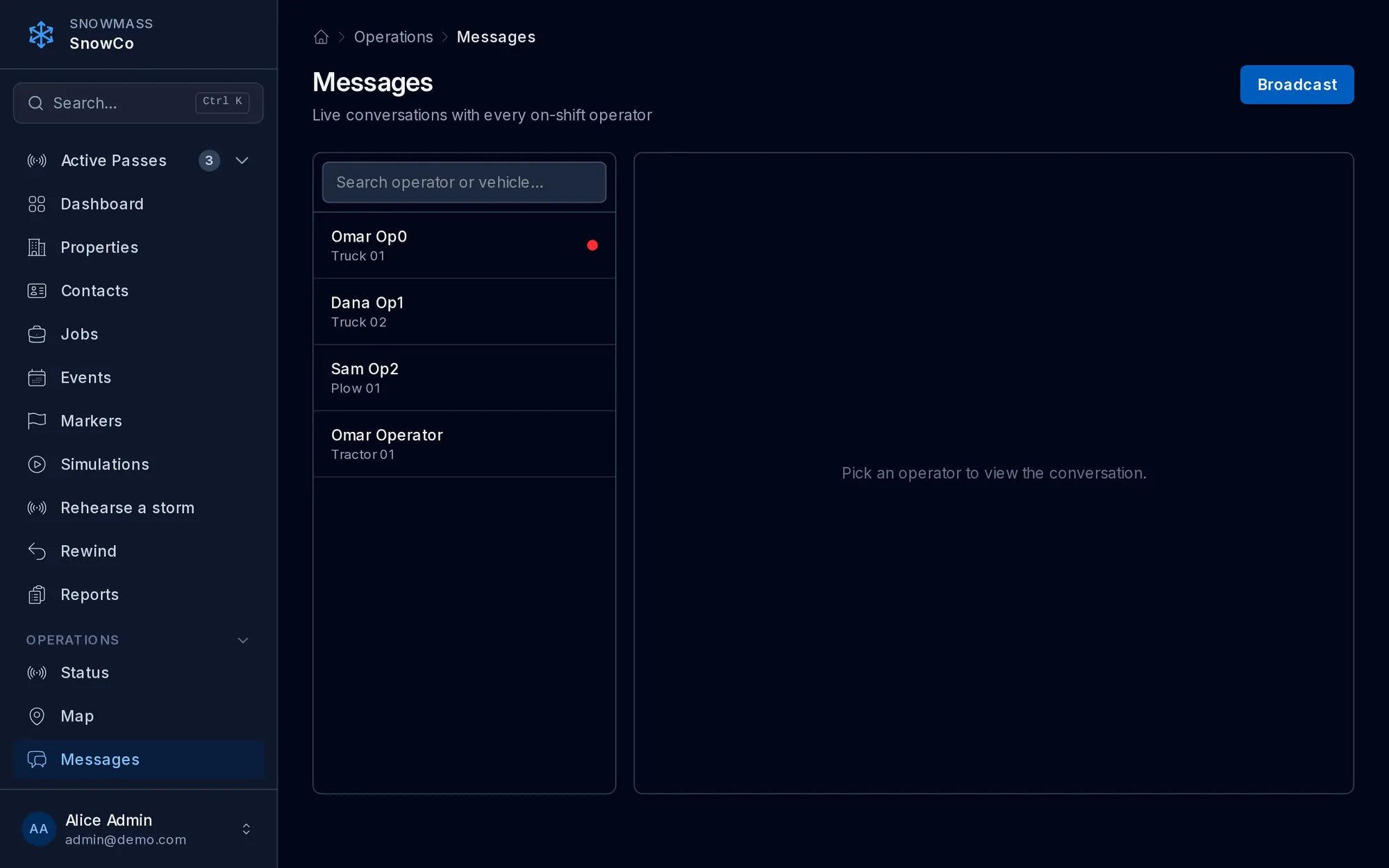
Operator messaging
Talk to the crew without the radio
Two-way chat with every operator, and one message to the whole fleet when plans change.
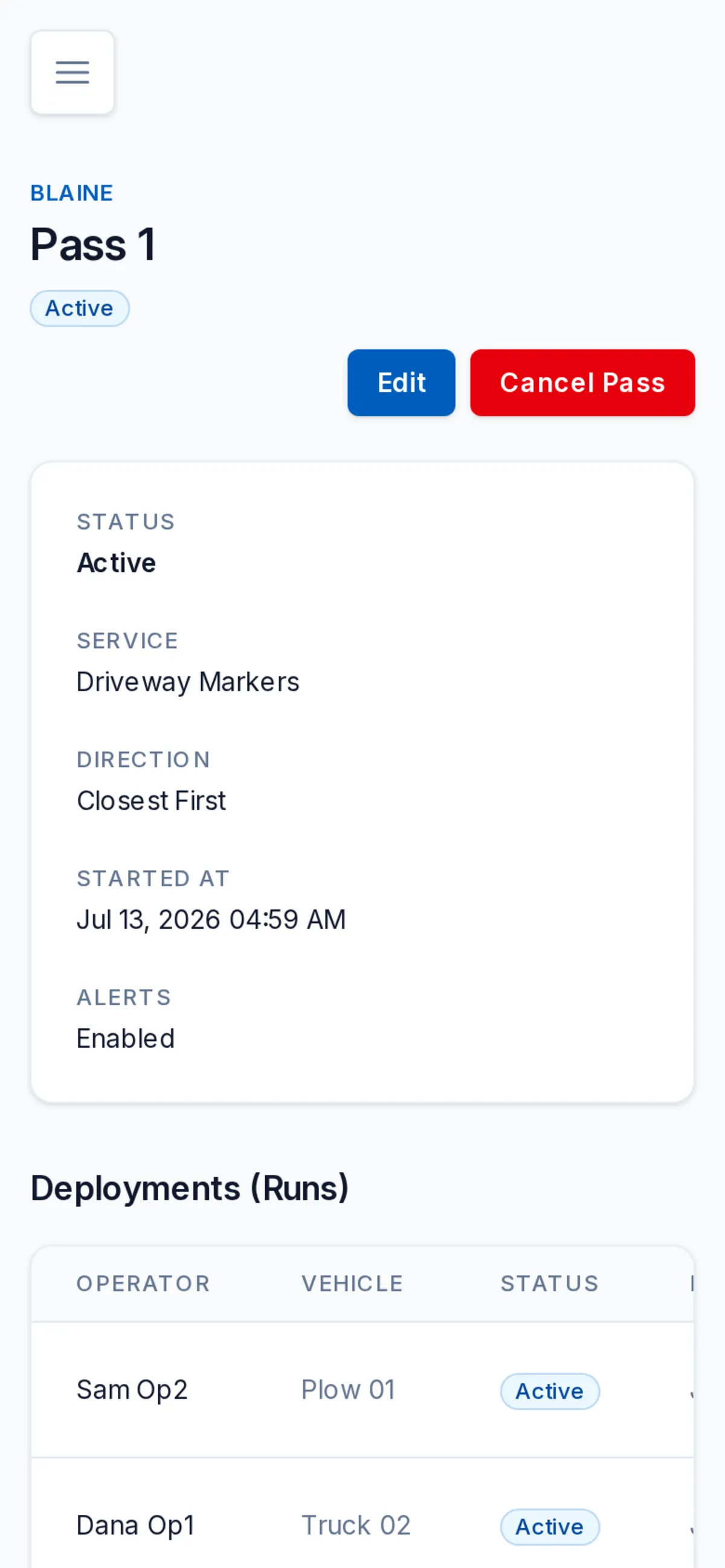
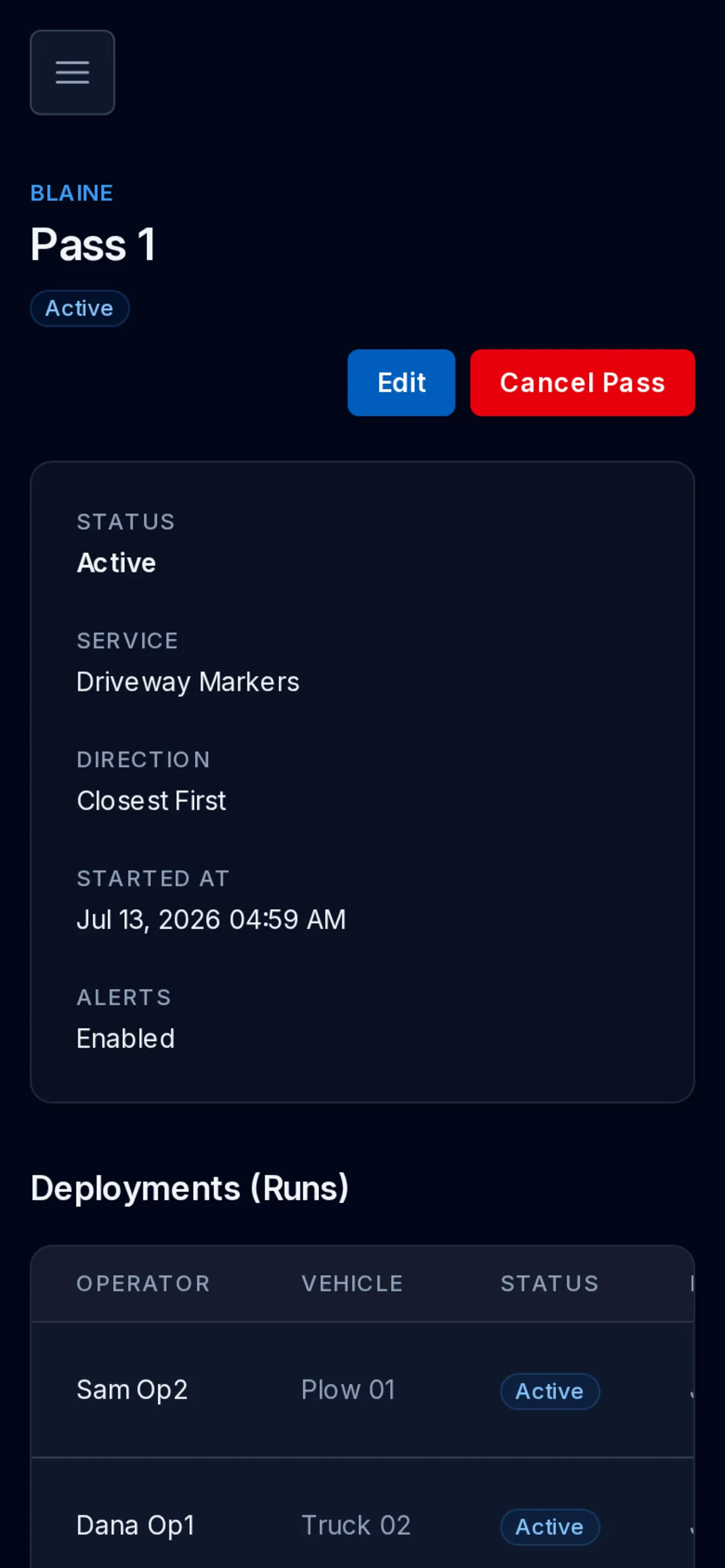
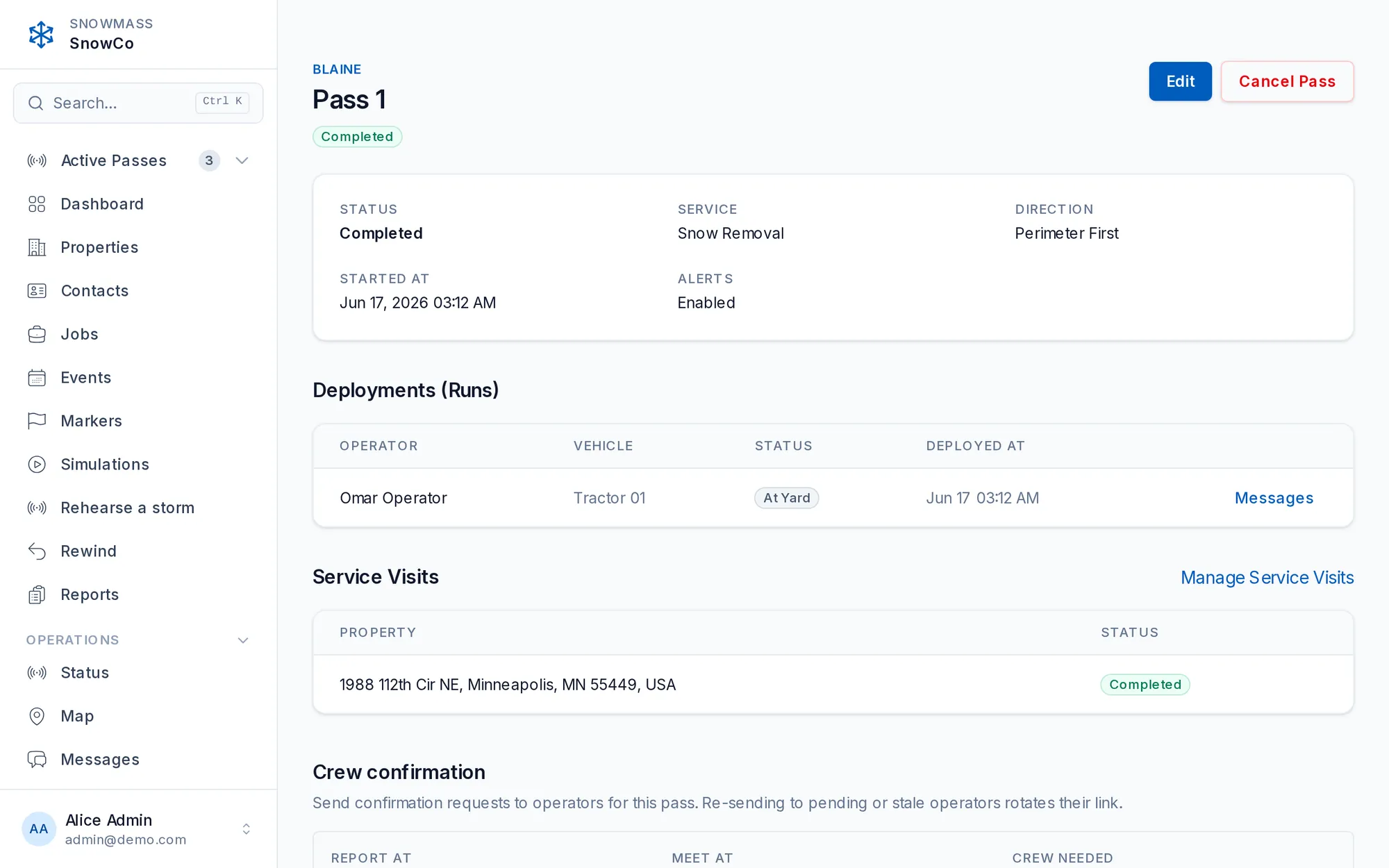
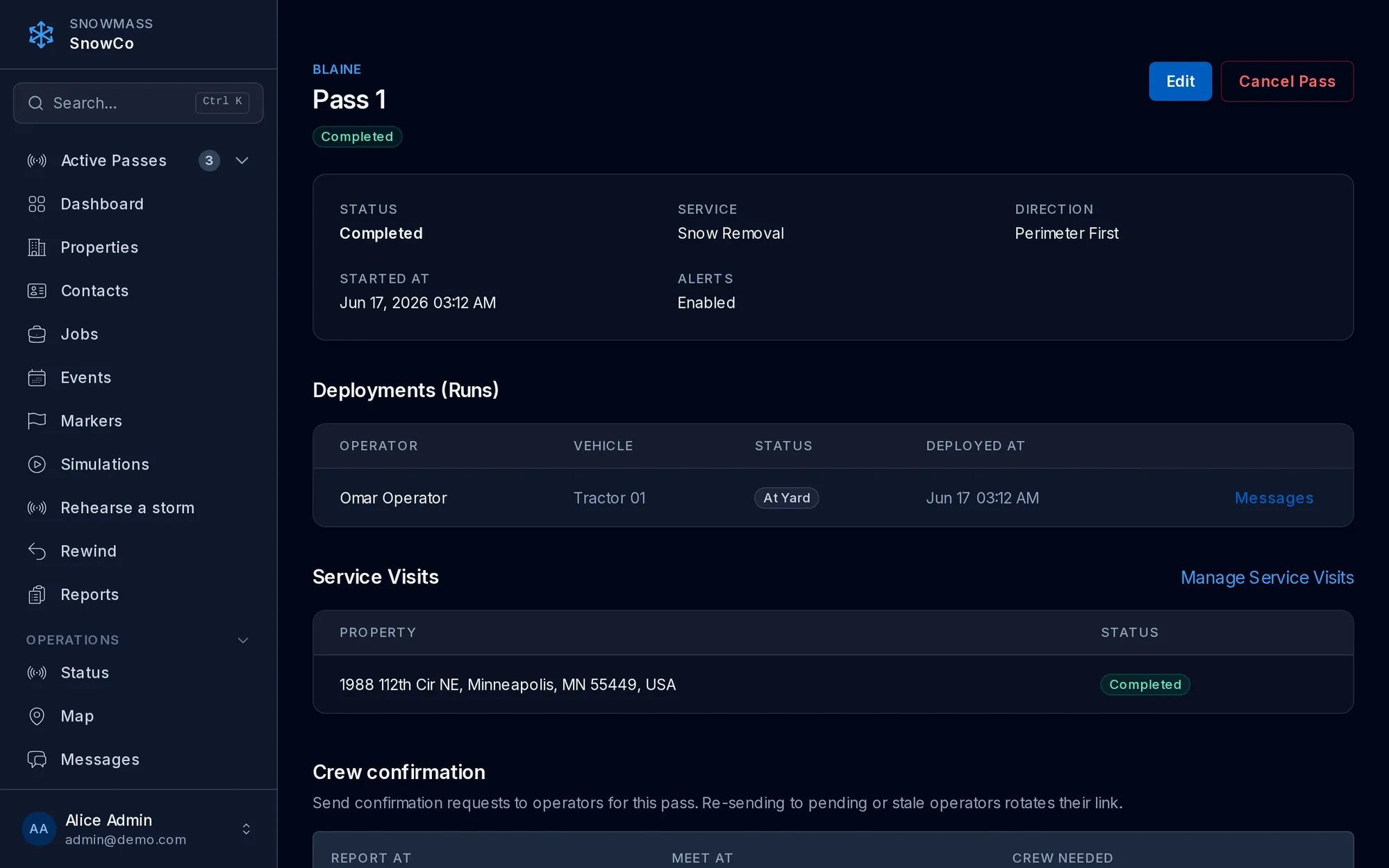
Pass detail
Every storm, fully accounted for
Who went out, which properties were done and when — the clean history your customers ask for.
Everything the storm needs
A dispatch engine, and everything around it
The swarm is the core, but a storm needs more than dispatch. Snowmass covers the whole night.
Dispatch engine
Work is assigned live, on real road times, without anyone drawing a route.
Live operations
One screen for the whole storm, and the fleet heals itself when a machine drops out.
Customer experience
Your customers get live arrival times, updates, and a portal — in their own language.
Crew & communication
Find out who's in, tell them where to be, and reach anyone without a radio.
Platform
Works on a tablet in a dead zone, in English or French, with a record of everything.
Dozens more, across dispatch, operations, customers and crew.
See all featuresSee it for yourself
Watch the swarm handle a breakdown
Run a storm scaled to your own fleet, knock a machine out mid-storm, and watch the work redistribute itself.
Build your simulationThe gap nobody else closed
Everyone fixed the driver. We fixed the customer, too.
Other tools gave your operators a decent app. Your customers still got silence until a machine rolled by. Snowmass tells them when you're coming.
Frequently asked questions
Do I have to build routes?
No. Place your properties on a map once. After that the work assigns itself, every storm.
What happens when a machine breaks down mid-storm?
Its properties go straight back to the fleet, and whoever is best placed picks them up. Nobody rebuilds anything.
What about the ridge the city plow leaves behind?
If your operator arrives before the street has been plowed, they clear the driveway and flag it — Snowmass brings the property back around so someone returns for the ridge. If the street is already done, there's nothing coming and neither is a second trip.
What kind of fleet is it built for?
Dense residential work — tight clusters of properties, where every wasted minute between stops adds up.
How does pricing work?
A monthly base fee, plus a small per-machine fee only in the months you actually deploy. Your whole crew is free.
Run your first storm this week
Build a storm scaled to your fleet, watch it run, then book a call to get set up for the season.